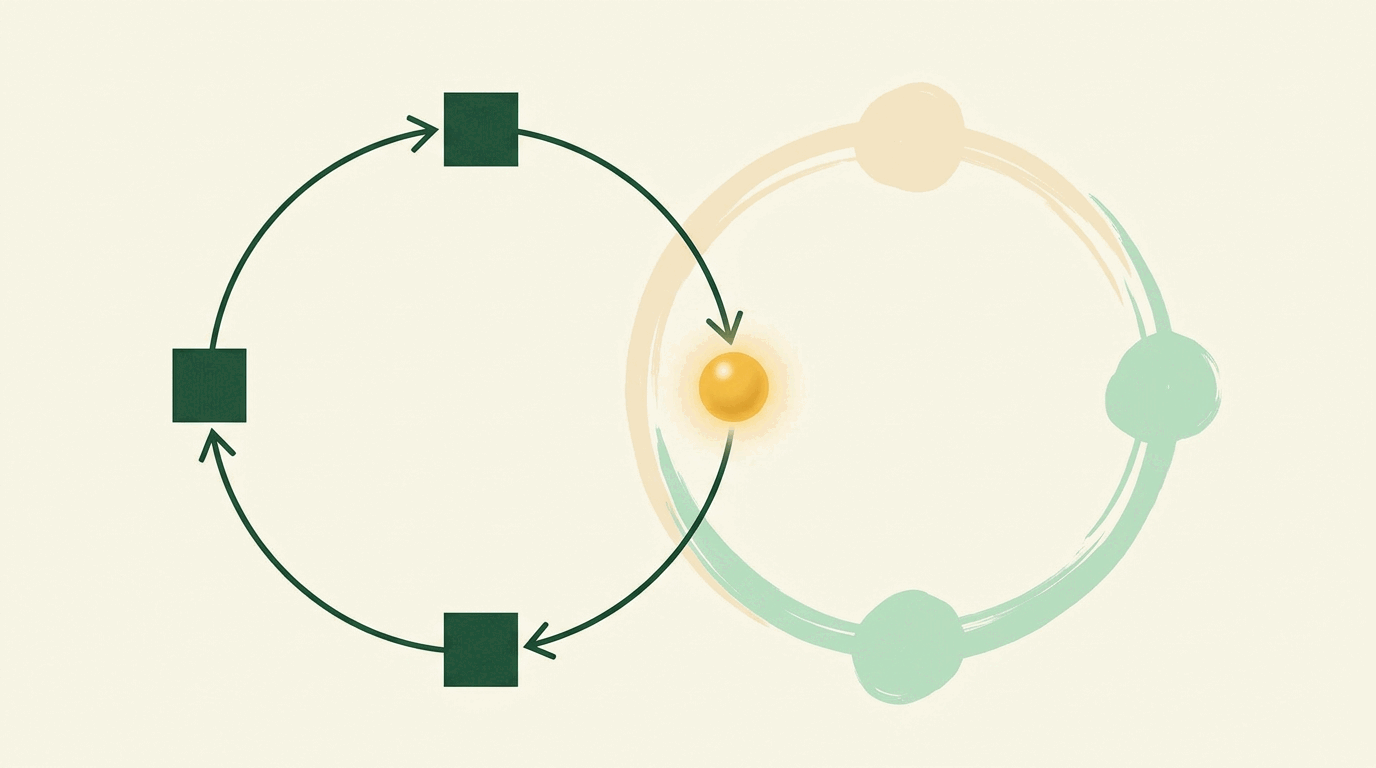
Two loops, not one bot.
Agents do discovery, matching, drafting, and execution. Humans keep judgment, relationship, and escalation. We design the handoff.
The GTM-agentic wedge: orchestration, not replacement.
Most go-to-market stacks were built for a different shape of work — SDR drafts, CRM logs, sales engineer demos, manager approves. Agents do not slot into that shape. They replace the spine. The vendors that promised 100% autonomous SDR found out the hard way: publicly reported churn rates of 70–80%, customer trust burned, and the deals that closed were the ones that would have closed anyway.
Orchestration is the position that's actually winning. The parts agents do well — pattern extraction, typed-graph matching, contextual drafting, deterministic send — move into agent-owned loops. The parts humans do well — judgment under tacit knowledge, customer relationship trust, escalation under stakes — stay where the trust resides. We build the boundary between them.
Aaron Levie's headless-software thesis names this at the interface layer: agents will use enterprise software 100x more than humans, so the systems that expose themselves cleanly to agents capture agent-to-agent distribution economics. GTM tooling fits the same shape. We build the headless GTM layer.
The two loops of agentic GTM.
Agent owns the volume work. Human owns the judgment work. The handoff is the architecture.
Agent loop
Discovery → Matching → Drafting → Execution
- 1
Discovery
ICP signal extraction from public data, internal CRM, and org charts. The agent reads patterns an SDR would have read manually and produces a structured candidate list.
- 2
Matching
Pairing capability against account opportunity via reasoning over typed graph edges — not embedding similarity. This is where production work begins.
- 3
Drafting
Copy generated from the matched pair's specific architecture, the AM's prior wins, and the enterprise's stated 2026 priorities. Templates are for emails that look like emails — exactly what the AM cannot send.
- 4
Execution
The easy part once draft, identity, and send-channel are deterministic. Guardrails and audit trail enforced at the boundary.
Human loop
Judgment → Relationship → Escalation
- 1
Judgment
Should this email actually go out? Does the relationship history support it? Is the timing right? These questions do not compress into prompts — they live in tacit knowledge the agent does not have.
- 2
Relationship
The AM owns customer trust. The agent does not get to spend it. When the agent surfaces a match, the AM decides whether to validate, defer, or kill — and that decision becomes training signal for the next batch.
- 3
Escalation
Pricing dispute, exec call, contract amendment. The agent hands the full context to the human and stops. No exceptions.
Why 100% automation fails the same way every time.
A vendor that promises full automation has either over-extended into the human loop or under-defined the agent loop. Both fail the same way: customer trust burns, AM trust burns, and the deals that close are the ones that would have closed anyway. If you're buying agentic GTM tooling, score it on which loop owns which decision.
Three layers of the GTM stack we build.
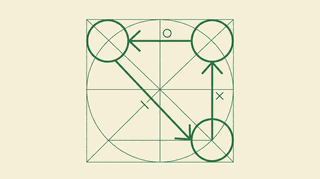
Signal & Matching Engine
Typed-graph reasoning over ICP signal, internal CRM, and org-chart context. We replace embedding-similarity matching with the kind of capability-to-account reasoning a senior AM would do — only faster and at scale.
Drafting & Orchestration
Copy generated from matched-pair specifics, the AM's prior wins, and the buyer's stated priorities. Drafts that read like the AM wrote them — because the architecture knows what the AM would have written.
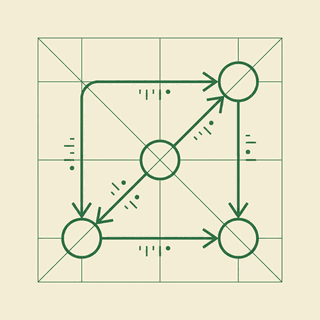
Deterministic Execution & Guardrails
Identity, send-channel, audit trail, and human-handoff thresholds enforced at the boundary. Send is the easy part. Knowing when not to send is the work.
Headless software for revenue teams.
Levie's thesis applied to GTM: agents will use your CRM, your Outreach, and your enrichment stack 100x more than humans will. We build the headless GTM layer — an API surface over your existing systems, not a separate product. Your tools of record stay where they are. The agent loop sits one layer above and the human loop sits one layer above that.
Why AgentStruct
Typed graphs, not embedding lookups
Capability-to-account matching is reasoning over typed edges. Vector similarity is a search index. We do not confuse the two.
Agent stops at judgment boundaries
Where tacit knowledge starts, the agent hands off. We design the handoff before we design the agent.
On-prem, CRM-adjacent deploy
Your data stays under your control. The agent sits next to your systems of record, not on top of them.
20 years of agent formalism
We've been designing agent architectures since BDI and FIPA were the state of the art. The 2026 stack is built on that lineage.
Score your GTM stack in 30 minutes.
We map which loop currently owns each decision — and which ones leak. Free, 30 minutes, no slides.